Related Articles
- Reviving Ancestral Wisdom: How Outdated Superstitions Can Shape Contemporary Mental Health Practices
- Veiled Histories: How Little-Known Figures from the Past Can Transform Contemporary Leadership Approaches
- The Art of Disruption: How Past Rebellions Shape Today's Entrepreneurial Spirit
- Lost in Translation: The Surprising Role of Language in the Evolution and Misunderstanding of Global Currency
- Currency as a Canvas: Exploring the Intersection of Politics, Propaganda, and Artistic Expression in Monetary Design
- Unmasking the Shadows: How Currency Forgers Shaped Financial Trust and Safety Through the Ages
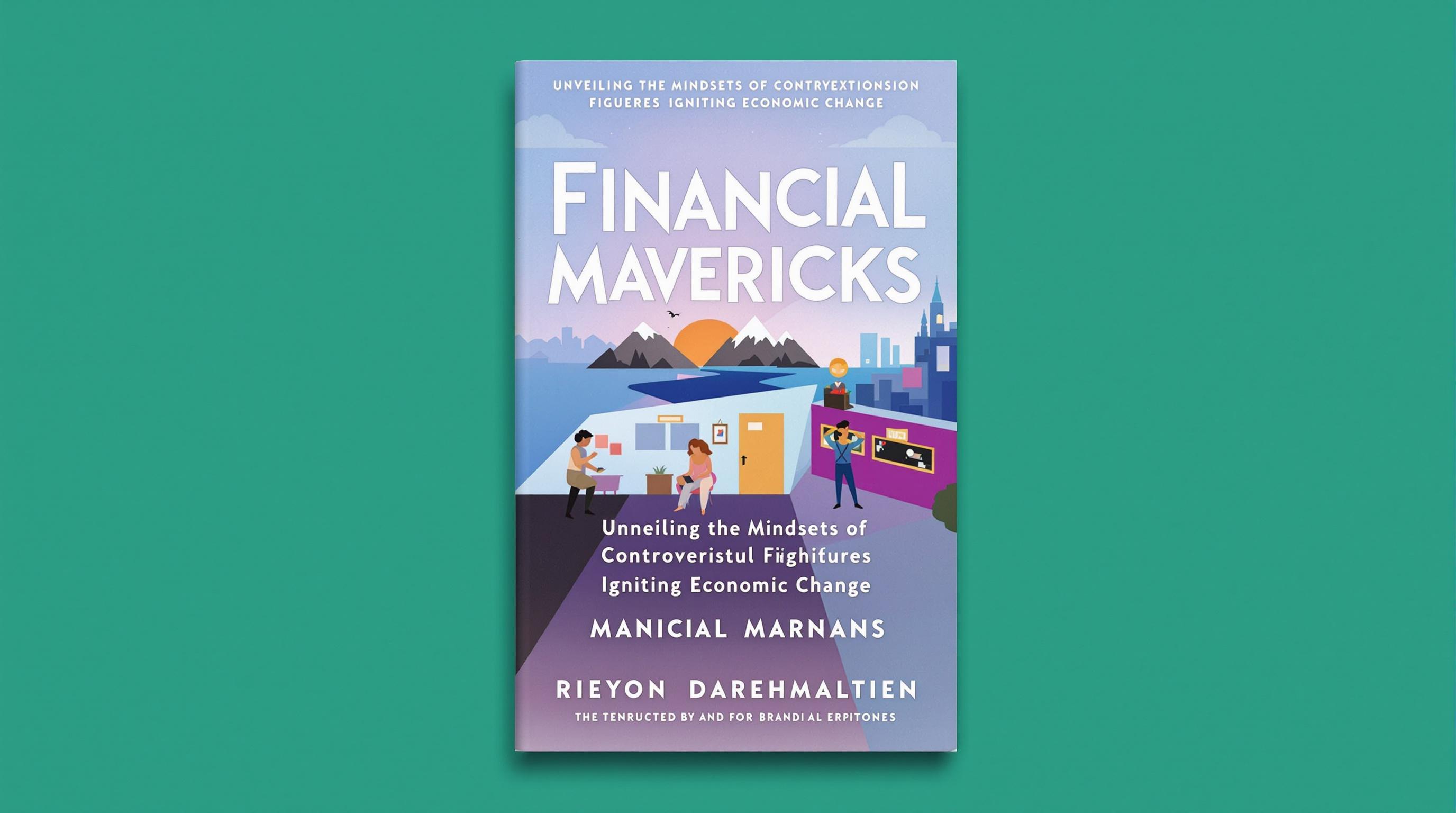
Financial Mavericks: Unveiling the Mindsets of Controversial Figures Igniting Economic Change
Financial Mavericks: Unveiling the Mindsets of Controversial Figures Igniting Economic Change
In a world where conventional financial wisdom often seems stagnant, a new breed of financial mavericks is challenging the status quo and driving economic change. This article delves into the unique mindsets of these controversial figures, illustrating their strategies, impacts, and the invaluable lessons they offer for aspiring changemakers.
Breaking the Mold: Who are the Financial Mavericks?
Financial mavericks are not your typical investors or economists. They come from diverse backgrounds, often eschewing traditional finance pathways to carve unique roles in reshaping the economic landscape. Whether it's through disruptive cryptocurrencies, unconventional investment strategies, or revolutionary business models, these visionary figures are captivating audiences and sparking discussions world over.
The Rise of Cryptocurrency: A Case Study
One of the most notable mavericks in recent years is the enigmatic figure behind Bitcoin, Satoshi Nakamoto. Believed to be a pseudonymous developer or group of developers, Nakamoto blueprinted an entirely new approach to currency: decentralized, peer-to-peer transactions devoid of traditional banking systems. As of October 2023, Bitcoin has surpassed a market cap of $1 trillion, showcasing the potential of cryptocurrencies to not only transform personal finance but also to challenge governmental monetary policies (CoinMarketCap, 2023).
According to a recent survey by Statista, as of 2023, over 350 million people worldwide are now using a cryptocurrency wallet—an increase of more than 120% from 2020. This rapid adoption signifies a global discontent with traditional banking and a desire for financial autonomy.
Challenging Conventional Wisdom
While some financial experts firmly believe in the tried-and-true principles of investing, mavericks often take unconventional paths. For instance, Gary Vaynerchuk, better known as Gary Vee, has made waves with his aggressive investment in not just stocks and real estate but also in startups, NFTs, and social media. His approach embraces a rapid failure mindset, asserting, “If you’re not failing, you’re not trying hard enough.”
Vaynerchuk’s portfolio demonstrates a mix of technology and personality-centric businesses, highlighting how emotional intelligence can be leveraged for investment success. His story exemplifies the importance of adaptability and embracing change in a swiftly evolving economic landscape.
Wit Meets Wealth: The Humor of Financial Mavericks
To some, finance is a dry, serious subject, but many mavericks inject humor into their narratives. Think about the antics of influencers like Graham Stephan. With a blend of relatable financial advice and comedic storytelling, he has built a massive following of young investors eager to learn about saving and investing in an engaging way. According to a recent YouTube statistic, Stephan’s channel boasts over 3.5 million subscribers, demonstrating the appeal of an approachable finance education (YouTube Statistics, 2023).
In contrast to the austere nature of Wall Street, Stephan’s light-hearted finance content offers a refreshing take, proving that education doesn't have to be dull. His skilled utilization of humor not only entertains but also informs, creating an environment where financial learning feels less intimidating—a crucial factor, especially for the younger demographic.
The Power of Storytelling
Financial mavericks are often remarkable storytellers, capable of weaving their journeys into compelling narratives. Take the case of Mellody Hobson, co-CEO of Ariel Investments. Raised in a humble environment, Hobson's ascent to becoming a leading voice in finance symbolizes a shift in the economic narrative for people of color. In her TED Talks, she has shared poignant stories combining personal struggle with profound insights into the investment industry.
Statistics suggest that in 2021, Black Americans held just 2% of the nation’s wealth, a reflection of systemic inequality (Federal Reserve, 2022). Hobson’s advocacy for financial literacy among marginalized communities not only highlights this disparity but also ignites a spark of hope. By sharing her personal narrative, she encourages others to see themselves in positions of financial influence.
Controversies: The Double-Edged Sword of Disruptive Change
Just as often, these mavericks spark controversy. Take Elon Musk, for instance; his tweets can send Bitcoin and Dogecoin prices skyrocketing or plummeting within minutes. Controversial as he might be, Musk’s ability to influence markets demonstrates a unique intersection of celebrity and finance. For example, when he announced that Tesla would “accept” Bitcoin for vehicle purchases, the cryptocurrency saw an immediate spike, affirming that even a single tweet can drastically shift economic tides.
This phenomenon raises questions about the volatility of cryptocurrencies and how much influence mavericks truly wield. Are their impacts beneficial, or do they destabilize markets? Advocates argue that such disruption is necessary to spur innovation, while critics fear the repercussions of unregulated market manipulations.
Shaping Economic Change Through Activism
Many modern mavericks increasingly embrace social activism as part of their financial ethos. One pertinent figure is Divya Narendra, co-founder of the equity crowdfunding platform, Rounds. Narendra champions accessible investing, promoting shared wealth creation. His venture has raised millions, giving everyday individuals more power to invest in businesses they believe in.
Statistics highlight the rise of equity crowdfunding: in 2022 alone, over $1 billion was raised in the U.S. through equity crowdfunding platforms (SEC, 2022). This surge showcases a budding interest in democratizing investment opportunities for the average person, challenging the traditional gatekeeping of wealth creation.
The Wisdom of Imperfection
In an age that prizes perfection, many mavericks advocate for the wisdom of imperfection. Simon Sinek, a renowned author and motivational speaker, often emphasizes the importance of “starting with why.” His philosophy has resonated deeply, particularly among businesses that prioritize purpose over profits. Research suggests that companies with a strong sense of purpose are 30% more likely to outperform their competitors (Harvard Business Review, 2022).
This emphasis on meaning challenges the traditional metrics of success in the finance world. By inviting a more holistic view of business and investment, Sinek, along with other mavericks, underscores the importance of societal impacts on financial success.
Building Bridges, Not Walls
Ultimately, the mindsets of financial mavericks inevitably point toward a more interconnected world. Figures like Richard Branson, founder of the Virgin Group, exemplify this by consistently leveraging business for social good. Branson's Ventures are often aligned with addressing social issues like climate change and poverty. For example, Virgin Unite, the nonprofit foundation of the Virgin Group, has invested heavily in combating climate change initiatives.
As markets become increasingly globular, the significance of positive social impacts will rise. Maverick thinkers argue that businesses must transition from isolated profit-seeking to community-centered approaches that foster collective well-being. This paradigm shift paves the way for sustainable economic practices for future generations.
From Disruption to Transformation
Watching the rise of billion-dollar startups like Glossier and Warby Parker shows how mavericks are transforming industries through disruptive thinking. These companies have taken the traditional retail model and turned it on its head, offering consumers personalized experiences through direct-to-consumer models. This shift is reinforced by a Salesforce study revealing that 66% of consumers expect companies to understand their unique needs and expectations (Salesforce, 2022).
These high-flying startups invite a new wave of entrepreneurship that reflects consumer priorities, pushing companies to adapt or risk becoming obsolete. We see now that the transformative power of financial mavericks flows from a clear understanding of their audience, a quality that has propelled many firms to success.
Conclusion: Embracing the Maverick Mindset
The landscape of finance is in flux, driven by bold thinkers willing to challenge the norm. As millennials and Gen Z take on increasingly active roles in wealth creation, the legacy of these financial mavericks will shape not just the economy, but the very fabric of society. These figures teach us that the pathway to financial evolution often requires courage, humor, and a willingness to embrace our own imperfections.
Ultimately, the call to action is clear: let’s take a page from the book of financial mavericks and adopt their mindset of disruption and innovation. After all, as they have shown, true economic change arises not from following rules, but from rewriting them altogether.
In the end, to quote Gary Vee, “You can’t make a lot of money if you’re not willing to lose a little.” Perhaps it’s time we all dared to step into the world of financial mavericks.
Read More